The practice
A practice with one subject
Praxis Pelvia opened in 2019 on the ground floor of a 1920s building on Kalkumer Straße, five minutes from Unterrath station. We treat the pelvic floor and nothing else.
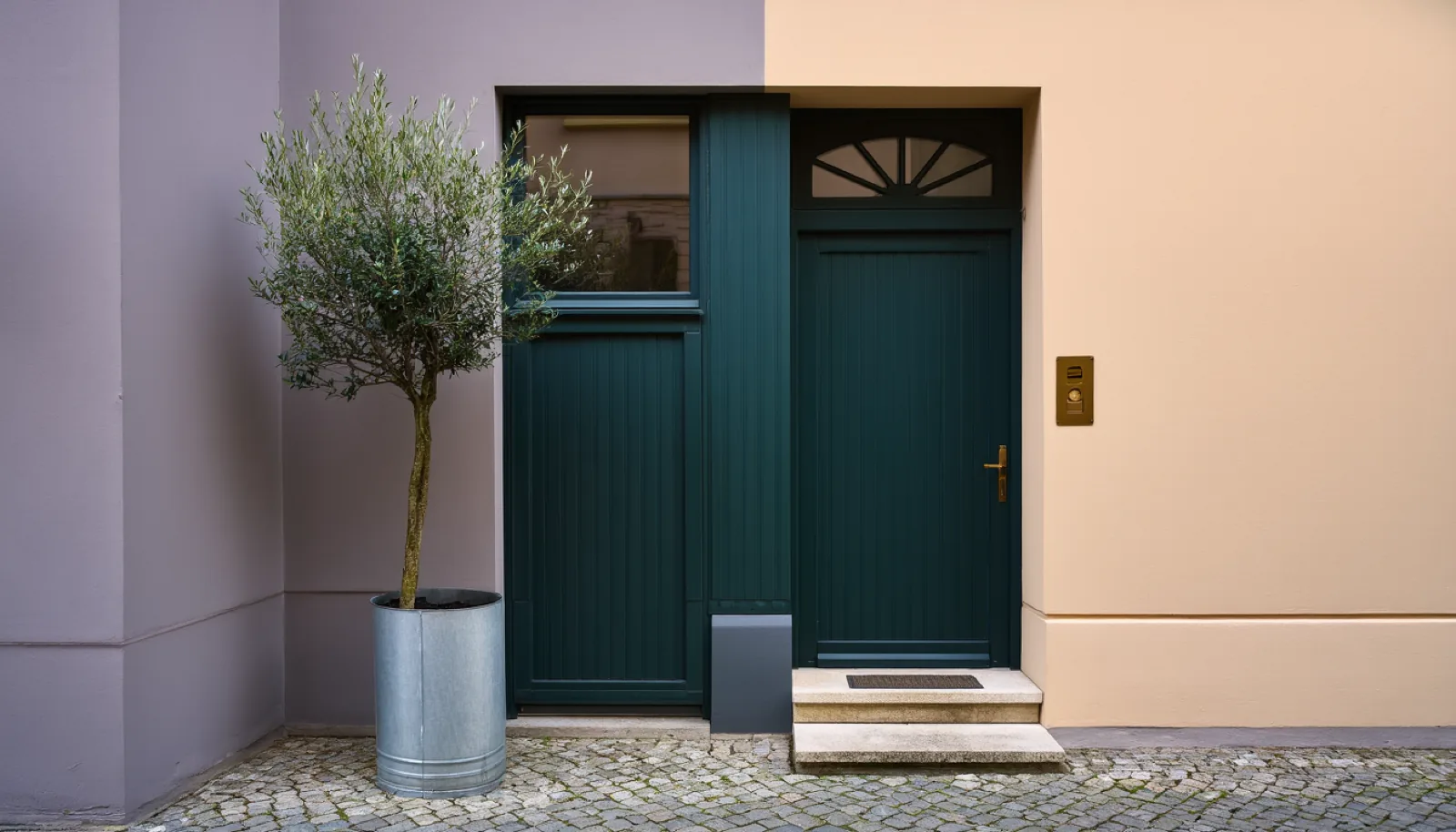
Marlene Ostwald spent eleven years in a large general practice in Düsseldorf watching pelvic floor patients get twenty minutes between a shoulder and a knee, in a room with a curtain. The waiting list for the one colleague who had done the certificate was four months long. She opened Pelvia to do the opposite: one subject, long appointments, closed doors, and the time to explain the anatomy properly.
We are deliberately small — three therapists, two treatment rooms, one movement room. We take the number of patients we can treat well, which means we sometimes have a waiting list of a few weeks. We would rather tell you that honestly than fit you in for fifteen minutes.
About a third of our patients come without a prescription and without telling anybody they are here. That is a legitimate way to use a physiotherapy practice, and the whole practice — from the booking form to the layout of the waiting corner — is built to make it easy.
How we work
Plain words
We say bladder, bowel, vagina, penis, rectum, prostate and pain, because those are the words your body works with. Nobody here will call it "down there".
Consent as a process
Every examination is explained before it is offered, offered before it is done, and stoppable while it is happening. Declining an internal examination does not end your treatment.
Evidence, honestly reported
Pelvic floor muscle training has good evidence in stress incontinence and prolapse symptoms; biofeedback has clearer evidence in bowel and post-prostatectomy work than in everything else. Where the evidence is thin, we say so instead of selling.
We hand back
The goal is a programme you run yourself. If you still need us weekly after three months, something in the plan is wrong.
Therapists
What "Physio-Pelvica" means
Physio-Pelvica is the certificate of the AG GGUP within the German physiotherapy association (ZVK) for gynaecology, obstetrics, urology and proctology. It is a postgraduate qualification: several multi-day modules with examination, supervised practice, and mandatory refresher training to keep the certificate current.
It is not a protected title and any physiotherapist may treat the pelvic floor without it. It does mean that the therapist has been examined on internal assessment technique, on the urological and proctological picture, and on when to send you back to a doctor. All three of our therapists hold it, at the full module 1–3 level, and refresh it every two years.
- MO
Marlene Ostwald
Physiotherapist · practice owner
- State-registered physiotherapist (Physiotherapeutin), 2006
- Physio-Pelvica certificate, AG GGUP im ZVK — modules 1–3
- Manual therapy · Sectoral practitioner of physiotherapy (Sektoraler Heilpraktiker)
- Course instructor certified under § 20 SGB V
Prolapse, post-partum rehabilitation, pelvic pain
German, English
- DK
Deniz Kaymak
Physiotherapist
- State-registered physiotherapist, 2013
- Physio-Pelvica certificate — modules 1–3
- Further training in sexual pain disorders and trans health
- EMG biofeedback (Deutsche Kontinenz Gesellschaft)
Pain with penetration, trans and non-binary pelvic health, urgency
German, Turkish, English
- JR
Jonas Reinke
Physiotherapist
- State-registered physiotherapist, 2011
- Physio-Pelvica certificate — modules 1–3
- Uro-oncological rehabilitation (Deutsche Kontinenz Gesellschaft)
- Sports physiotherapy, return-to-load
Continence after prostate surgery, bowel symptoms, athletes
German, English
The practice
The rooms
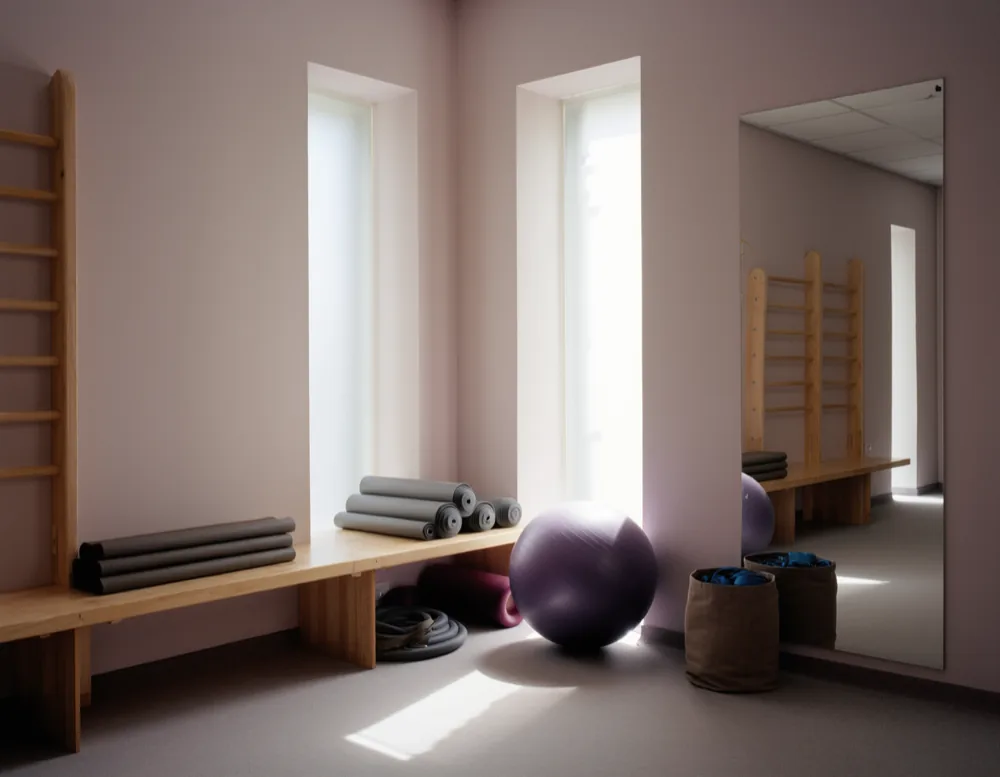
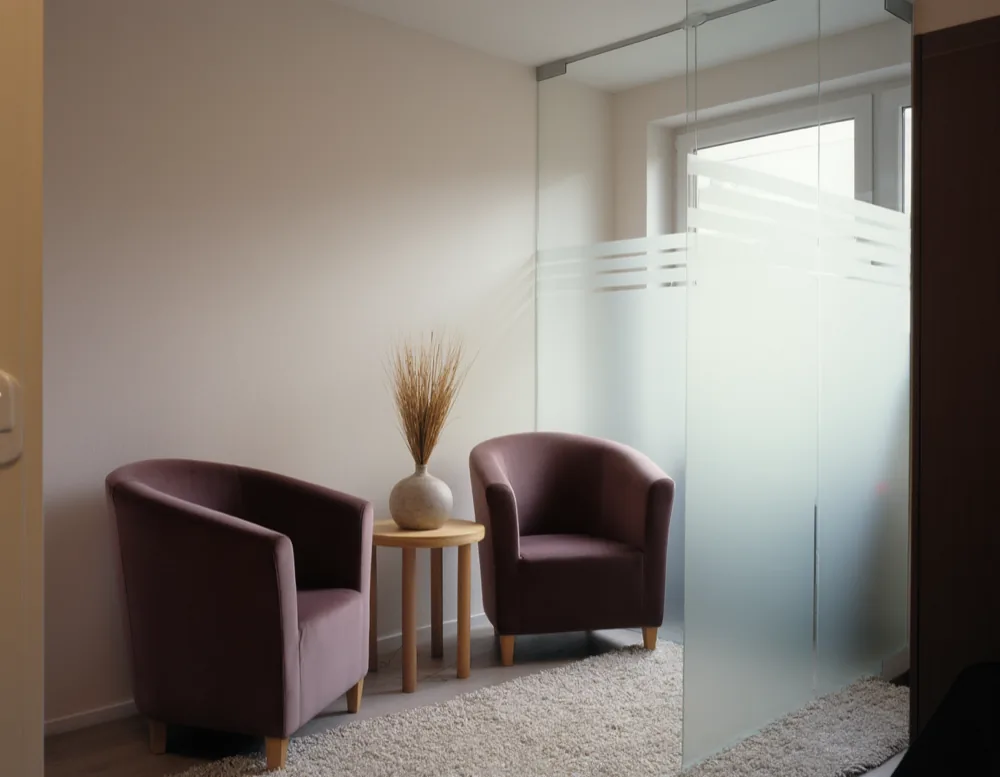
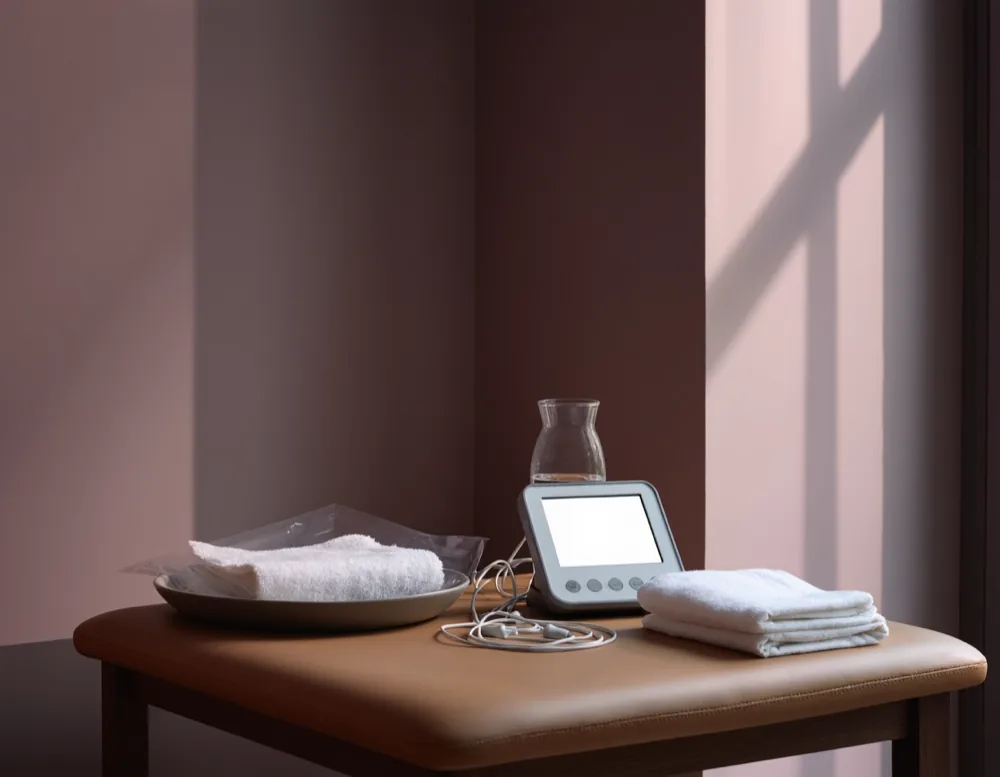
Two treatment rooms with solid doors and no shared space, a movement room for the course, and a waiting corner with two chairs. Appointments are spaced by fifteen minutes so that you do not meet the patient before you in the corridor.
Access
The honest version, because a promise of "barrier-free" that turns out to mean four steps is worse than no promise.
- Entrance
- One 8 cm threshold at the front door, no steps beyond it. A portable ramp is kept in the hallway — tell us when you book and it will be out.
- Doors and corridor
- Corridor 1.40 m wide, treatment room doors 90 cm clear. A wheelchair can turn in both treatment rooms.
- Treatment couch
- Both couches are height-adjustable from 47 cm. Transfer assistance is available; please tell us in advance what you need so we schedule the time.
- Toilet
- One accessible WC, 1.50 m turning circle, grab rail on the right-hand side, no left-hand transfer.
- Hearing and sight
- Induction loop at reception. Written treatment plans in 14 pt as standard, larger on request. Please tell us if you lip-read so we do not wear a mask unnecessarily.
- Language and support
- Treatment in German, English and Turkish. You may bring an interpreter or a support person to any appointment.
- Parking and transport
- Two marked parking spaces in the courtyard, one of them wide. Unterrath S-Bahn station is 400 m away, step-free; bus 730 stops 120 m from the door.
jameda
What patients say
★★★★★
„I had put this off for nine years. The first appointment was one hour of somebody explaining my own anatomy to me with a model, and nothing else. By the fourth session I could run for a bus again.“
Verified patient · jameda · March 2026
★★★★★
„Came in after my prostatectomy with two pads a day and no idea what I was doing. The biofeedback screen was the moment it clicked — I had been squeezing the entirely wrong thing for six weeks.“
Verified patient · jameda · January 2026
★★★★★
„Asked me at every single step whether it was alright to continue. Nobody has ever done that. Waiting time for the first appointment was five weeks, which is the only reason this is not longer.“
Verified patient · jameda · November 2025
Extracts from patient reviews published on jameda.de. Shortened for length, otherwise unchanged, and reproduced with the reviewers' knowledge. Reviews are anonymous by default on jameda; we do not know who wrote them and we do not ask.
Opening hours
- Monday
- 08:00 – 18:00
- Tuesday
- 09:00 – 19:00
- Wednesday
- 08:00 – 18:00
- Thursday
- 09:00 – 19:00
- Friday
- 08:00 – 14:00
- Saturday & Sunday
- Closed
The telephone is answered between 08:00 and 12:00. Outside those hours please use the booking form or leave a message — we do not have a separate reception team, so the person who calls you back is a therapist between two patients.
Finding us
The map is provided by OpenStreetMap. Loading it transmits your IP address to the OpenStreetMap Foundation in the United Kingdom. Nothing is loaded until you press the button, and we do not remember that you pressed it.
Kalkumer Straße 84 · 40468 Düsseldorf